Mastering the Art of Classic Homemade Tiramisu
Discover the secrets to creating an authentic and creamy Italian tiramisu in your own kitchen. This elegant no-bake dessert is perfect for any occasion.
Read more
The Essence of Italian Tiramisu
Tiramisu stands as one of the most beloved Italian desserts globally, celebrated for its perfect balance of robust coffee, delicate ladyfingers, and a rich, velvety mascarpone cream. The name translates to lift me up, a reference to the energizing boost provided by the strong espresso used in the recipe. It is a classic no-bake dessert that relies on the quality of its simple components to create a sophisticated flavor profile that appeals to nearly everyone.
The beauty of this dessert lies in its simplicity and the way the textures interact after resting. By allowing the layers to meld, the ladyfingers soften just enough to become cake-like while maintaining their structure, and the cream stabilizes into a decadent cloud of sweetness. Whether you are hosting a formal dinner party or simply seeking a refined treat to enjoy at home, mastering the technique behind a traditional tiramisu is a rewarding culinary endeavor.
One of the primary benefits of preparing this dish is its suitability for advance preparation. Unlike many desserts that must be served fresh from the oven, tiramisu actually improves in flavor and texture after spending several hours in the refrigerator. This characteristic makes it an ideal choice for busy hosts who want to minimize last-minute stress while still providing a high-quality, impressive finish to their meal.
Essential Components for Success
To achieve the authentic taste of a traditional Italian tiramisu, selecting high-quality ingredients is paramount. Mascarpone cheese, an Italian cream cheese, acts as the foundation of the filling. It is essential to use cold mascarpone and cold heavy cream to ensure the final mixture maintains its structure. The richness of the yolk-sugar emulsion provides the necessary depth of flavor, while a touch of vanilla extract adds a subtle aromatic complexity.
The coffee component serves as the soul of the dessert. Strong brewed coffee is mandatory, as it must stand up to the sweetness of the cream without becoming lost. For those who enjoy a deeper, more spirited flavor, adding a small amount of coffee liqueur or dark rum to the cooled coffee base is a classic choice. It is vital that the coffee is completely cool before you begin dipping the ladyfingers, as hot liquid will cause the biscuits to disintegrate too quickly.
The ladyfingers, or savoiardi, are the structural elements that provide the base for the cream layers. These crisp, sponge-like biscuits are designed specifically for absorbing liquid, making them the perfect vessel for the espresso. When sourcing these for your recipe, look for the traditional variety that is dry and airy, which ensures that they do not become overly soggy or mushy during the assembly process.
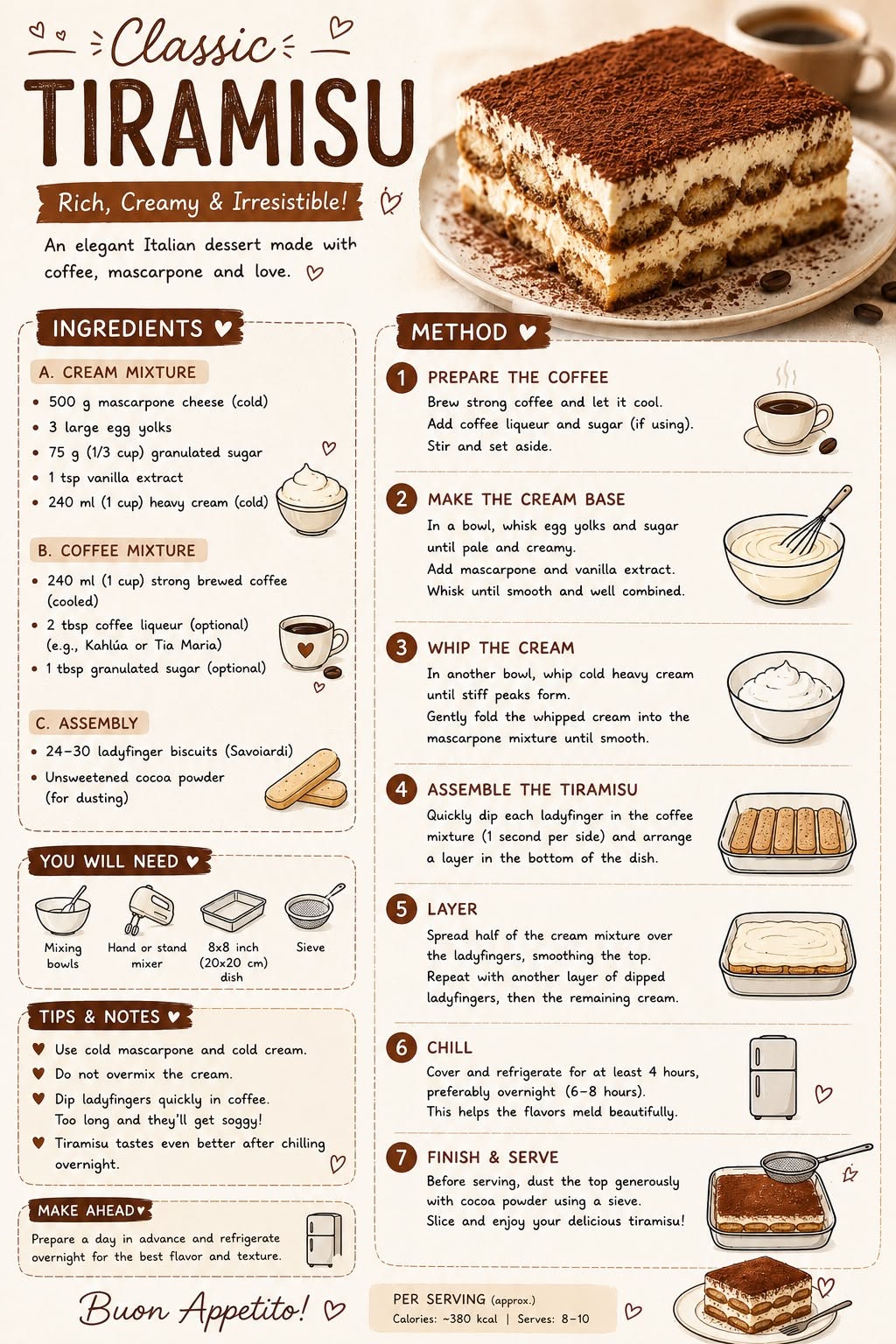
- 500g cold mascarpone cheese
- 3 large egg yolks
- 240ml strong brewed coffee
- 24-30 savoiardi ladyfingers
- Unsweetened cocoa powder for the top
Step-by-Step Assembly Techniques
The assembly process requires a delicate touch and careful timing. Begin by creating your coffee soak and setting it aside to reach room temperature. Then, prepare the cream base by whisking the egg yolks and granulated sugar until the mixture becomes pale and thick. Once the mascarpone is folded in, gently incorporate the freshly whipped heavy cream. This careful folding motion is key to achieving a light, airy texture that is neither too dense nor too runny.
When dipping the ladyfingers, speed is of the essence. You want to submerge each biscuit briefly, perhaps for just one second per side, to allow for adequate absorption without compromising the integrity of the biscuit. If the ladyfingers stay in the coffee for too long, they will lose their shape and ruin the crisp layers of the finished product. Arrange them neatly in the bottom of your dish to create a solid foundation.
After placing the first layer of soaked ladyfingers, spread half of the mascarpone mixture evenly over the top. Use an offset spatula to smooth the surface, ensuring the edges are filled. Repeat the process with a second layer of soaked ladyfingers and the remaining cream. This layering technique allows for perfect portioning and ensures every bite contains a balanced ratio of soaked biscuit and creamy filling.
Refinement and Final Presentation
Patience is the final ingredient in any great tiramisu recipe. Once fully assembled, the dessert must be covered and refrigerated for at least four hours, though an overnight stay in the fridge is highly recommended. This cooling period is not merely for temperature control; it is where the moisture redistributes, the flavors harmonize, and the cream sets to the proper consistency.
Just before serving, take the time to finish your creation with a generous dusting of high-quality unsweetened cocoa powder. Using a fine-mesh sieve helps achieve an even, velvet-like coating that adds a pleasant bitterness to contrast the sweet cream. This final step is crucial for the classic aesthetic of the dish and provides that signature dark top layer that makes tiramisu instantly recognizable.
When slicing the finished dessert, use a sharp knife and clean it between each cut to ensure the layers remain distinct and visually appealing. Serve chilled, perhaps with a fresh cup of espresso to mirror the flavors within. Following these simple steps will ensure a professional-quality result that demonstrates your attention to detail and respect for this timeless Italian classic.